
As I’ve discussed many times, one of the delights of my role as a school teacher is being permitted to offer a weekly roleplaying games club generally known as “the D&D Club” by the students because, you know, brand identity is a thing. It runs on Tuesdays after school for about 90 minutes, giving us a tight 75-minute window for actual play.
In September, as we begin a new academic year, I’ll have the role of providing introductory games for newbies. I’ll also need to integrate straggler players whose GMs have stepped aside to focus on their examinations or other such pressures. There’s a turnover of players year-by-year and usually a strong influx as the club returns each autumn.
The challenge for me is in making the whole thing interesting for myself. Being a veteran RPer of more than 45 years, I find the standard Dungeons & Dragons tropes boring and uninspiring. But I am faced with newbies and young folk who have the tropes – and the similar derivatives from computer games – as their primary lens through which to experience roleplaying games.
Ultimately, I want to be able to introduce new players to the magic of roleplaying games and, over time, emphasise the principles of actual roleplay over getting drawn into mechanistic rules-play and the prevailing culture of story-telling. I am concerned on the one hand to preserve the experience of in-character roleplay as a distinct style, while on the other hand helping newbies find their way into the hobby along familiar paths.
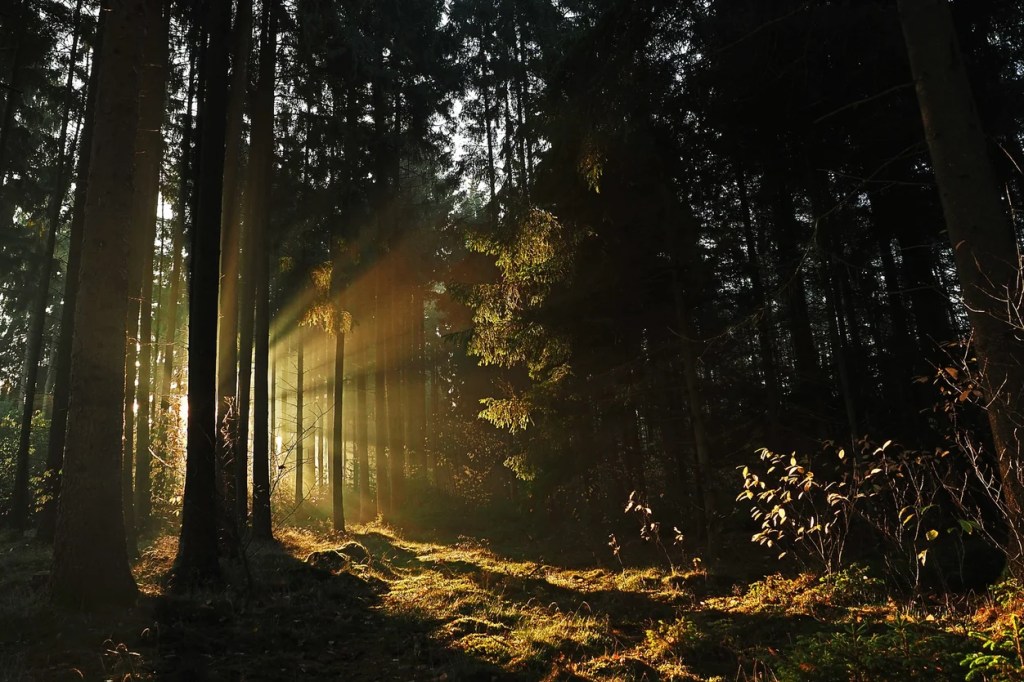
The Forgotten Isles represents one pathway I am exploring to provide a British-Fantasy inspired setting that contains some familiar tropes but which anchors players in a much stronger sense of verisimilitude. I am trying to make the fantasy make a little more sense by grounding it in a kind of Brythonic cultural flavour that lends itself to a so-called Dark Age vibe. I can imagine running a short location-based adventure as a starting point and then providing some further exploration afterwards.
The Midlanders
I like to start with a solid human baseline, so the Midlanders exhibit a Romano-Brythonic feel completely devoid of Saxon influence. Rather than inhabiting generic medieval castles, they live amongst the architectural bones of the collapsed Prydanic Empire. They are a highly pragmatic, civic-minded people who maintain the remaining imperial paved roads and rely heavily on disciplined military formations for survival. It grounds the human experience in something that feels genuinely historical and gritty, rather than relying on tired high-fantasy kingdom tropes.
The Halflings of the Moorland Parishes
For the Halflings, I wanted to shift a little out from standard pastoral tropes and instead give them a distinct tone defined by meticulous precision engineering and a Welsh-Brythonic flavour. Instead of merely farming, they are the realm’s premier artisans, forging delicate mechanisms, intricate brass horology, and microscopic wares in tiny, soot-stained hearths. While they are outwardly peaceful and welcoming of trade at their borders, they are fiercely territorial. If their heartlands are threatened, that pastoral facade drops, and they seamlessly transition into a lethal, invisible guerrilla force.
The Álfar
The Elves, or Álfar, bend the ethereal woodland archer cliché into something rougher. Grounded in a harsh, Nordic-inspired coastal environment, they are opportunistic seaborne raiders and shrewd traders who worship their own pagan pantheon. They operate as a strict matriarchy where women hold all political, economic, and magical authority, ruling from great timber longhouses built high into the frost-rimed canopies of the northern taigas. Depending on the season, the male populace is either kept safely indoors as exquisite, pampered consorts, or deployed as rugged, highly expendable vanguard shock troops.
The Wayfarer Cabal
Finally, to handle spellcasters without resorting to cloistered scholars in high magical academies, the setting relies on the Wayfarer Cabal. This is a loose, informal brotherhood of pragmatic, kindly figures who walk the muddy roads and ancient ley lines. They act as the connective tissue between these isolated cultures, serving as healers, historians, and impartial mediators. Crucially for setting the tone, their magic is distinctly “hedge” in nature. They focus on practical, grounded applications like weather-weaving, mending broken tools, and advanced herbalism rather than flashy, world-ending incantations.

Powered By GURPS
Because this is a game setting designed for newbies, I aim to leverage the work of the late Mook and many discussions had with Doug Cole over the years. I’m also influenced by The Alexandrian’s work on ‘open tables’ with the focus on easy pickup and fast character creation. While the introductory game will rely on pregens for speed, returning players will naturally have the option to craft their own characters.
Despite the reputation of GURPS as complex (which we debunk ruthlessly on GURPStalk), I intend to utilise the basics of the game engine to power this setting. For the newbies at the table, the core mechanic is incredibly simple: roll 3d6 under your skill. This allows the rules to fade into the background quickly.
A key element for me is how the 3d6 bell curve produces predictable, average results most of the time. This naturally supports the grounded, gritty feeling of the setting far better than the swingy, unpredictable nature of a d20, making the world feel more believable. I know others will reject this aesthetic but it has served me well over the past 5+ years of running a school club.
On top of all of that, the skill-based system allows me to accurately reflect the cultures I have in mind. The precision engineering of the Halflings or the hedge magic of the Wayfarers are essentially just skills, encouraging players to think about who their character is and what they can do, rather than looking at a rigid list of class abilities. The simple utility of GURPS Magic is there for those beginners who want to have magical powers.
I’d also point out that combat in GURPS is inherently dangerous. A quick skirmish feels like a real threat, which perfectly suits this Dark Age flavour and subtly encourages players to try actual roleplaying and problem-solving before drawing their swords. I’ll not fuss too much with the entire combat system in detail, focusing on the core cut-and-thrust, but the danger is still very real.
Ultimately, it’s hard for me to get excited about running yet another D&D Starter Set adventure, or a one-shot based on the ancient traditions of the old-school d20-rolling Basic D&D that I once favoured. Instead of re-learning what feels to me like tired old rules, I get to indulge in my fantastic low-fantasy roots with a setting that is at least vaguely believable and powered by a system I trust.
I’m not sure how far the pathway will extend as a campaign setting but I do hope that the idea of creating an exciting initial adventure and a small sandbox for continued play will at least stand a chance of engaging new players to this fantastic hobby and drawing them in to the possibilities for roleplay as a distinct character in an emergent tale of heroic action.
Game on!


Sounds right up my alley, Che. 🙂
LikeLiked by 1 person
I think it is extremely important to provide newcomers with opportunities to explore all sorts of different ways to play – from a base experience which they can get into, understand, and appreciate easily. Your selection of GURPS mirrors my selection of BRP for that purpose. I think we provide the best introduction when we model (rather than explicitly teach) how and why we picked a system for play, so that helps inform their baseline expectations for what being a gamer is.
Good stuff!
LikeLiked by 1 person
Couldn’t hurt to get in there with another game before D&D claims them. I’m pretty sure a large chunk of roleplayers are only vaguely aware (if they’re even aware at all) that anything else exists!
Nothing wrong with D&D but a little part of my soul dies every time someone asks me, upon seeing us playing CYBORG or Alice Is Missing or whatever, “oh, is that like D&D?” 😅
LikeLiked by 1 person