
As a person who introduces lots of new players to Dungeons & Dragons, and to other RPGs too, the biggest thing I have come to value as a tool is a nice simple character sheet. The Dungeons & Dragons Adventure Game starter set from 2000 has just the kind of sheets that I love to use at the table.
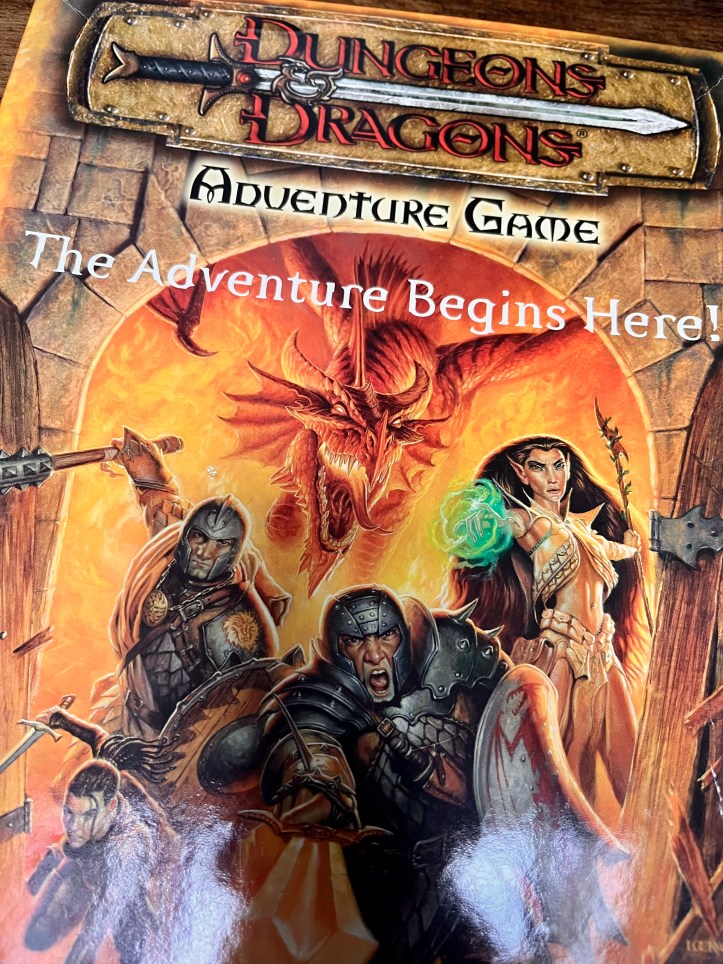
The largest barrier for the new player entering the game is their anxiety. If you’ve got someone to agree to play, the last thing you want to do is trigger deeper anxiety by showing them the standard character sheet for your chosen system. Experience shows that most people are anxious about “complexity” and “maths” at this point.
Dungeons & Dragons, by way of example, is not actually terribly difficult at its core. While there are rules to learn and maths will be done, it’s the kind of stuff that we usually learn in Primary School: addition and subtraction, the occasional bit of multiplication and division. But the sight of numbers can be a turn-off to a lot of prospective players.
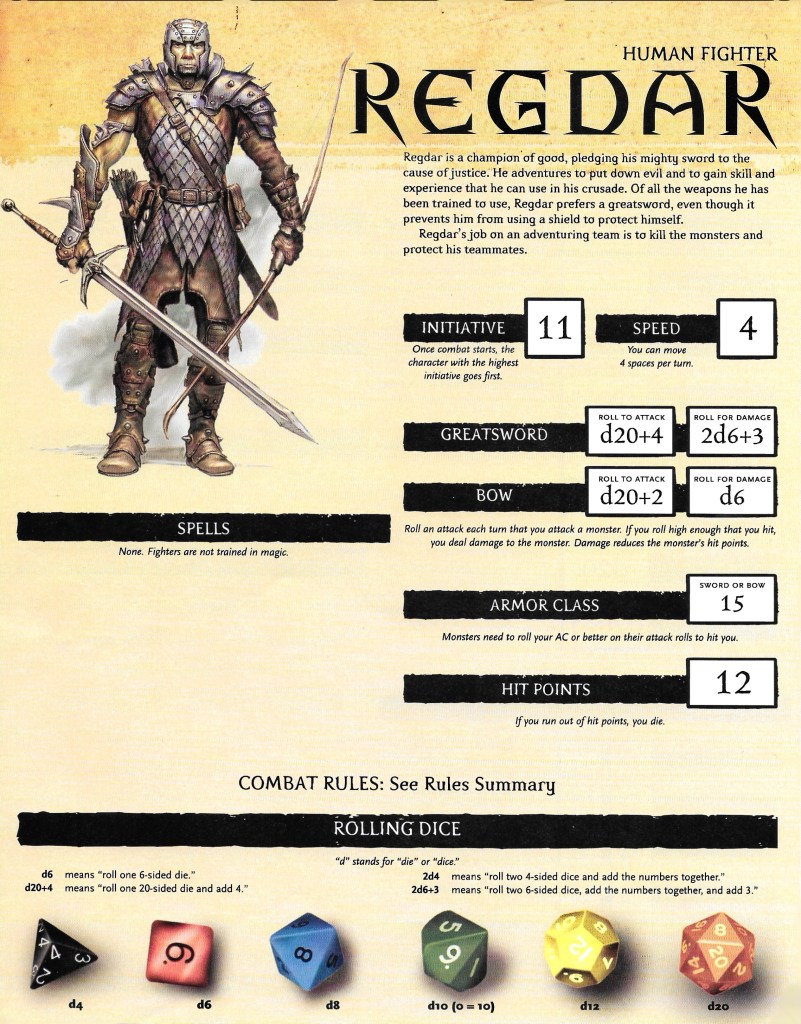
The D&D Adventure Game from 2000 did a marvellous job of minimising the cognitive load and making the game feel more accessible. The sheet puts all the rules you need to know on the character sheet along with only the stuff you’ll need for a simple dungeon scenario. My favourite innovation was the inclusion of pictures of the die types.
As you can see from Regdar (above), the front side focuses on the combat numbers and does nifty little things, such as including the formula, “1d20+4” for the “Roll to Attack” on the Greatsword and simplifying Initiative to 17 (instead of introducing the 1d20+7 roll to the game). Showing the dice helps new players learn which die is which.
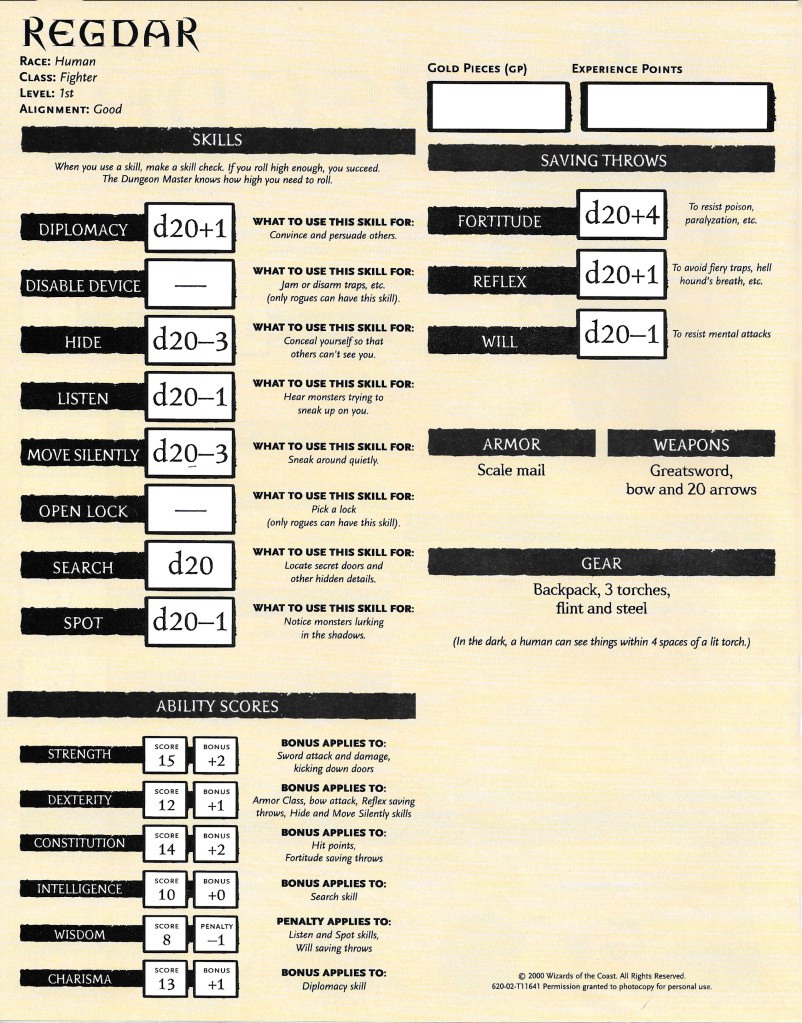
The back of the sheet focuses on the Skills in use in the starter set. Just including the main eight Skills allows for cognitive load to be managed, given the human capacity of around 7 to 9 things that we can process comfortably and choose between. The three Saving Throws to the right and the very simple equipment list make it easy to grok.
The sheet recognises that the core Ability Scores are on the periphery of importance – given how rarely they are actually used – but includes them to allow the sheet to “feel D&D” and also offer those numbers for when the GM might call upon them. What’s also nice is that there’s a simple sheet available in the box for when you Level-up.
Notice how the italicised rules orient the player without being overwhelming. “Oh, I use Diplomacy to convince and persuade others.” That’s easy to grasp and frees the player up to think about the roleplay. I like the summary at the top of the front page which gives a flavour of the character’s motivation and his role in the adventuring team.
Overall, it’s a great example of how to design a product to do the heavy-lifting for the player and GM trying to learn/teach the game. In practice, I can draw attention to the description of the situation and inviting the player to decide (in this case) what Regdar will do. Only when the skills of the character need testing do I direct attention to the sheet for a roll.
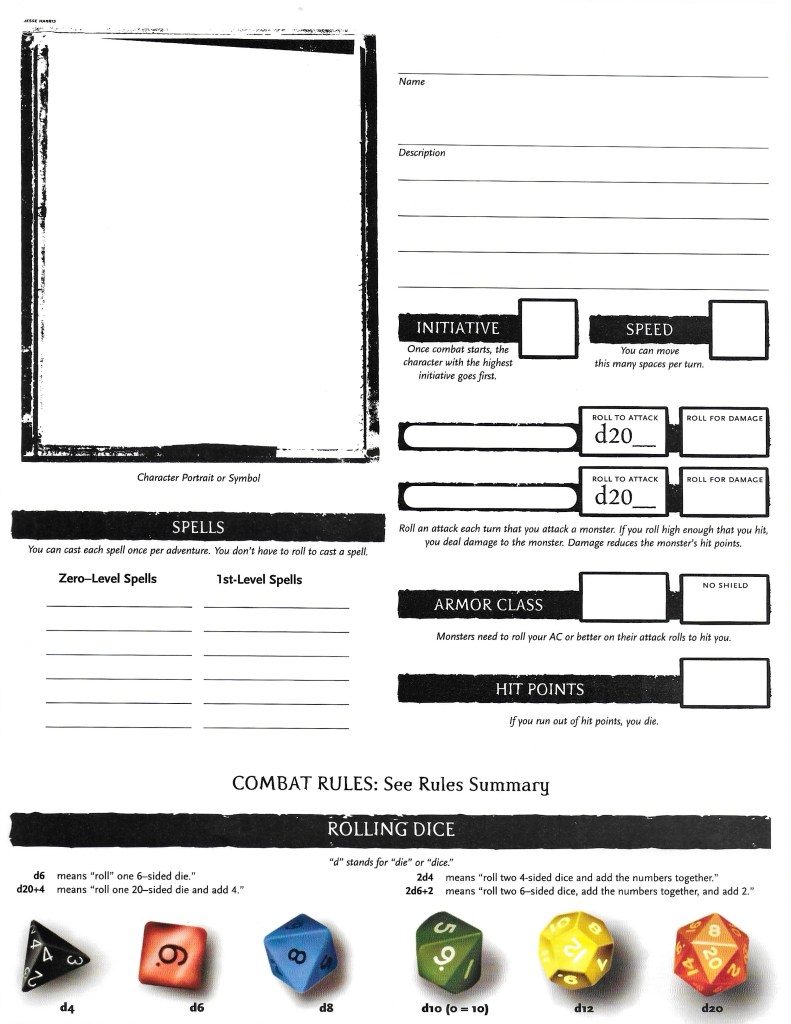
I would like this kind of design to be available for the games I run in 2025: where is the simple sheet for D&D Fifth Edition? I know that the modern game has fewer details to track to begin with, but the Starter Set just gives the players a standard character sheet. Experience has shown me that using a simpler form takes down the anxiety.
Don’t get me started on GURPS (my favourite game system). I know that the game has super-flexibility but, honestly, something as simple as the Mook’s old QuickStart sheets but produced with the high production values that SJ Games could muster would make onboarding new players so much easier.
Game on!
 Roleplay Rescue’s Blog
I find it interesting that in 2000 they were still calling D&D an “Adventure Game”.
LikeLiked by 1 person
To be fair, I think that was just the name for the starter product, to differentiate from the full-blown role playing game. The scenarios inside take a more HeroQuest feel, but that’s a subject for another post.
LikeLike