
Hailing from Portland, Oregan, Brian Jamison had been gaming since he was about eleven years old. According to the “About the Author” section at the back of “Gamemastering“, he was a LARPer and the designer / producer of the MMORPG “Underlight” in the late 1990s. But the “Introduction” tells us that:
I used to struggle as a Gamemaster. I’d ask myself, why does it take
Jamison, B (2011) “Gamemastering”, Rampant Platypus Press, page 1
so long to come up with a new adventure week after week? And why is
it that most roleplaying rulebooks, despite being hundreds of pages long,
never thoroughly address how to actually prepare for and run a game?
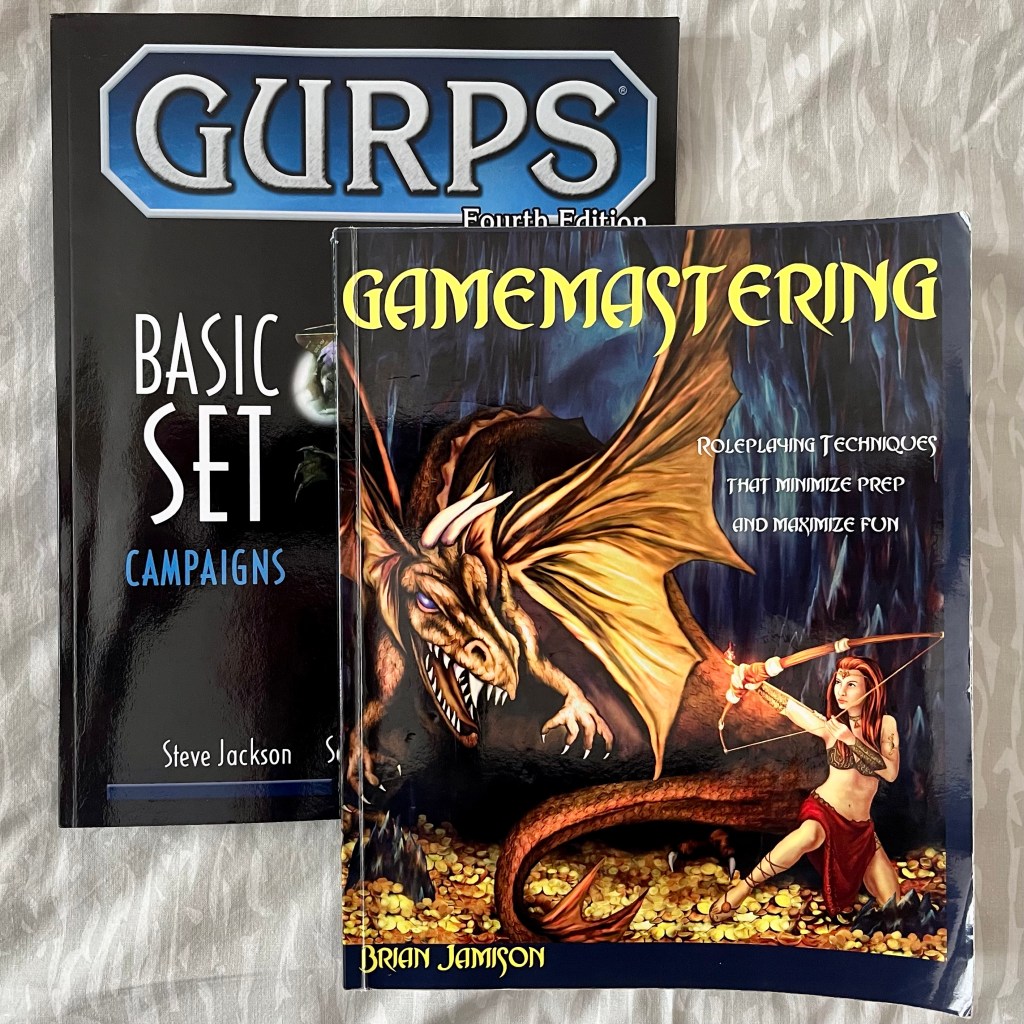
The book is his attempt to share “one possible way to gamemaster, start to finish.” When I first read the free .PDF version (now unavailable from the original host site) back in 2012, it was a fresh breath of air into my world as a roleplayer. Lots of good ideas… and an almost equal dose of things I passionately disagreed with.
The first big idea that rocked my thinking was The One Law laid out in Chapter 1:
“The more the Gamemaster plots, the less the players will follow the
plot.”
It was a strident rejection of the “storytelling” tradition that had grown up through the late 1980s and 1990s, with words that I have oft heard repeated from people who clearly have never heard of Jamison’s book:
GMs sometimes write a story in advance because that’s what they want to do. These folks should write a book/play/movie and get it published or produced. Likewise, if the players want to act in a scripted environment, they’d probably have more fun with a theater troupe. Those are great activities, but they aren’t roleplaying.
Jamison (2011), pages 11-12
The second big idea followed on its heels: don’t choose a game system or write an adventure before you’ve chosen the players and agreed on a setting; don’t roll up characters but rather co-create them with your chosen players.
It was the first time I came across the idea that is expressed today as “running session zero” and Jamison dedicates four chapters, the first major part of the book, to achieving this. Frankly, it’s one of the best described processes for such an endeavour I have read.
In practice, this idea of choosing the players – based on their play preferences and style – and then agreeing the setting first was (then) new and weird. Even today, the “Traditional Way” (as Jamison puts it) is still the way most people set up a new RPG game:
- GM chooses game system
- GM buys / writes adventure
- Characters are rolled up
- Start playing
Jamison espouses a very different and much longer approach to setting up. In my recent games, both the school-based “modern-horror” and a one-to-one “prehistoric fantasy”, I’ve returned to his advice to great positive effect. With my own want to improve the Fantasy engagement, I’ve found Jamison’s advice very fruitful.
In this sequence of blog posts, I plan to lay out the impact of his advice and my reactions to it. While I passionately dislike some of his comments, through the pages of this old GMing book I find much to commend it to anyone who seeks to escape the twin traps of Narrativist railroading and shallow Gamist worlds.
Game on!
 Roleplay Rescue’s Blog
That is different for sure.
For one, I can’t “choose” my players, because they are my childhood friends and we played together for around 30 years, I guess.
We, more or less, know what each other likes to play or how each other plays.
The second part, agreeing on a setting, it’s really good advice. I had many failed campaigns because I wanted to GM something that my players really didn’t want to play. They were up for the ride, sure, but it died fast. My actual Gurps After the End campaign was a group choice.I presented three options of what I’d like to GM:1. Dungeon fantasy, 2. Post-apocalyptic, 3. Supers. They choose postapoc, and we voted together many things for the campaign. It has been working great until now.
also, I asked them to answers some questions about the characters and we created their stat cheet together.
it’s been something totally new for me.
Thanks for sharing this about the book, I would not have thought about what I was doing with my actual campaign otherwise.
LikeLike
Yeah, the bit about choosing players was striking to me when I first read it: I played (and generally still play) with whomever is local and sits at the table. If you’ve had friends as gamers for 30 years then I guess you’re doing something right – and this is where Jamison immediately started to annoy me… but the bit about how to start with setting (not rules) changed my gaming in a good way.
LikeLiked by 1 person
[…] On to Gamemastering Part I […]
LikeLike
[…] insistence that we choose our players carefully and not invite folk who don’t fit the culture of our gaming table was originally deeply […]
LikeLike