
Working on a process for helping players to create a new character through a narrative focus has been a strong learning experience. The first lesson was in how long writing takes; the second was on how enjoyable it is to repurpose some gaming tools.
Introducing people to GURPS by giving them a Character Point budget and the Basic Set rulebook has always proven fruitless. Instead, I took a leaf from “How to be a GURPS GM” and decided to go for a “narrative” approach. The player and I sit down together and piece together a character idea through an combination of interview and making choices.
The process I have constructed borrows heavily – and in some parts outright steals – resources from the Imagine RPG’s “Legends of the Unknown” (LotU). Given a test ride for the Northern Isles game a couple of years ago, the process helped players to get in-role and create much deeper characters. The current re-write marries the process with the world notes for Balazar.
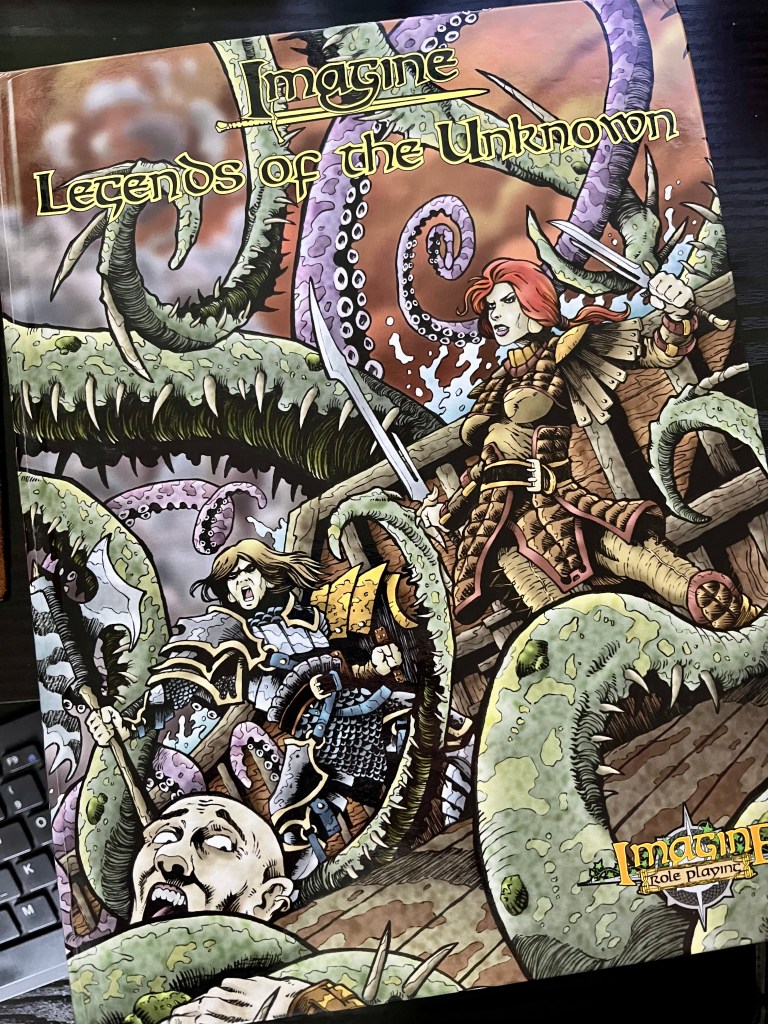
Starting with birth, we choose (or roll) for the answers to key questions. We also generate some family events and situations from which the player’s new character must make choices. I find that moral questions arising from believable everyday childhood situations are highly characterising.
Here’s one example, almost entirely quoted from LotU and re-rendered as a simplified D6-based table:
Scenario: The Injured Friend – You are playing too rough with a friend who is injured as a result. An adult runs over to assess the situation. Select (or roll) your actions:
| Die Roll | Character Action |
| 1 | Say nothing, do nothing. |
| 2 | Say that sometimes you get hurt too. |
| 3 | Point to an unrelated object that wasn’t the cause of the injury. |
| 4 | Say that it was the injured friend’s fault and be angry. |
| 5 | Help the person who is hurt and look sad but do nothing else. |
| 6 | Apologise and take responsibility. |
| Any of the above but later regret it and use it as a life lesson. | |
| Something else… |
I like that there’s some guidance in the form of suggested actions but also that the player can choose any other option they think of. The point is to help them characterise their persona through roleplaying. The die roll option is largely there for when I create solo characters.
After we’ve played through the character’s first 15 years of backstory, with at least three cycles of events and choices, we will have generated enough narrative to be able to build a character using the GURPS rules. I’ll do this collaboratively with the player, depending on their experience and interest.
Once we have characters with a little prior history, I am better placed to start creating some initial adventure hooks and moving towards play.
Game on!
 Roleplay Rescue’s Blog